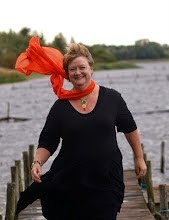
Dear readers of this blog
Since it has now been more than a year since this wymposium took place, and the traffic here has been very quiet lately, I have decided to continue blogging at http://www.healingstorydenmark.blogspot.com/
Thank you for following this blog, and I hope to meet you as readers of my healingstory blog.
Best wishes
Marianne
fredag den 1. oktober 2010

fredag den 2. april 2010
The power of group
narrative medicine: relationships, stories, and healing
Lewis Mehl-Madrona
A medical doctor trained at Stanford University School of Medicine, Lewis Mehl-Madrona has pioneered the conscious intregration of Native American approaches to healing with 21st-century health care. He is the author of Coyote Medicine, Coyote Healing, and Coyote Wisdom, a trilogy of books on what Native American culture has to offer the modern world. In this excerpt from Narrative Medicine: The Use of History and Story in the Healing Process, he discusses how relationships and the sharing of our personal stories can be tools for combating disease.
The Power of Large Groups in Shaping Identity
A few people have a bed for the night
For a night the wind is kept from them
The snow meant for them falls on the roadway
But it won’t change the world
It won’t improve relations among men
It will not shorten the age of exploitation.
—Bertolt Brecht
Imagine a ceremony in a rural area near Duncan, British Columbia, on Vancouver Island. In the longhouse, a youth is being initiated. Two hundred people are singing. The rhythm of multiple drums and rattles sets the pace. The youth is lying flat. He is lifted up and carried on the shoulders of eight men. He remains this way for four days after which time he is returned to the vertical. The collected energy is awe-inspiring. Even the trees outside are vibrating in the thick fog.
Western culture has forgotten the power of large groups. Modern culture’s closest version is the sports spectacle, which has a very different intent from ceremony and ritual. Religious services provide us with some sense of group power, but modern religion has vitiated the power of its ceremonies so greatly that it is hard to feel. (Notable exceptions to this generalization exist, including in some Roman Catholic masses, evangelical revival meetings, and Gospel churches.) While we can still go to ceremony in areas rich in aboriginal culture, it has vanished for much of the urban world.
In my teachings about ceremony and ritual, I like to show people how easy it is for a group of strangers to come together, create shared ceremony that is inclusive of elements of all their cultures, and then enact it. Whenever people gather with the same intent, coherence occurs. Coherence implies connectivity. In essence, we hook up. Hearing stories is healing. It requires a group setting to produce those stories and to hear other people’s stories. Within the group, we can hear the story and consider its source. Others are present to corroborate the story, thereby demystifying it. We have a diversity of sources supporting a common story. As people have become more and more isolated, however, such group experiences have become progressively less common in modern life. Lost along with the sense of community group experiences engender, is the opportunity to take a storied approach to health care through a process of group re-authoring. Groups that can provide this do still exist, and include Alcoholics Anonymous, the Native American church, and others in which people give testimony and the group reshapes the story, in a sense “re-authoring” a new story in a collaborative framework.
Life is storied and narrative is the mode in which meaning and values are stored. This allows for multiple techniques for transformation. We are not limited to one set of local practices and values, regardless of how successful they are in that locale. They may not generalize. As one elder told me, “When you think you know what you’re doing, you don’t. When you think you know what’s going on, you’re wrong.” That’s an important perspective to keep. We can talk about what we think we’re doing and what we think is going on as we work collaboratively with others, but in the spirit of remembering that we’re probably wrong and we’re only making gross approximations anyway. Transformative practices and results spontaneously emerge in large groups when people gather with the same intention, defying rational explanation.
In medicine, we doctors are faced with the difficulty that most of us don’t know that we have a story. We think everything we do is the factual truth. We forget that history really means “his story” or “her story.” When we talk to someone about her illness, we are actually helping her tell her story, how she came to be where she is. Having other family members and friends present results in a much richer story than would emerge with just the individual there. Health care is supposed to build on the story with each contact, but if we don’t know the story, each contact becomes a closed episode of its own, disconnected from every other episode. Fragmentation results as the outcome of a nonstoried approach to health care.
Disease Is Found Within Relationships
In the view of conventional medicine, disease is found within organs. Autopsies with microscopic confirmation are the ultimate form of diagnosis. When we look for disease, we look for structural and enzymatic changes within individual organs. Aboriginal elders tell me that what we are seeking is only the footprint of the disease. Looking as we do, we only find the tracks and traces of disease, which, they say, is long gone by the time a person dies. Look for the disease within the relationships, they say. That is where it is found. The rest is consequences and effects of the disease. This leads us to a consideration of the logic behind spiritual healing, for it addresses what lies between people, or between people and spirits, or people and earth energies.
Is some of the potential value of conventional medicine that it offers a break from being accountable for our own health as people? If it’s all random and biological and genetic, then it’s best left up to the experts. We can relax. We don’t have to change anything. We’re not responsible. We can just do what the experts tell us and let the chips fall where they may. For Europeans, modern medicine also broke the tightfisted hold of the church. In that context, illness had been seen as punishment from God. Illness was not supposed to be cured because doing so interfered with God’s divine will to punish. Healers were burned at the stake in thirteenth-century France and Spain. Conventional medicine freed Europeans from this terrible burden, from this belief that illness was justified punishment. If it was merely random and genetic, and people weren’t responsible, then the Church had to stop vilifying the sick. Clearly this was a step forward.
What must be pointed out, however, is that indigenous cultures didn’t need this liberation. While the conventional medical story may have liberated Europeans who had been held captive by the Roman Catholic Church, it was not so beneficial to aboriginal people who did not have the same need for liberation. An Assinboine elder put it bluntly:
From the treaty, they took everything away, the diet, the way of life; all that was put on the earth by the Great Spirit. The new diet made the people weaker. It was too much change, too quickly … [The old people] say that they brought sickness over from across the water; sickness like typhoid fever. And after they got rid of the Indian medicine and the people had to take white medicine, and some of it made us real sick. They kind of damaged our bodies through pills and their side effects. They were experimenting on us. It was the tame food, too. We were used to eating wild game. That’s why they figured our bodies lacked the strength they had before.
Thus, narrative medicine represents a search for a storied understanding of health and disease that works for all the world’s peoples, and not just Europeans. It is as compatible with indigenous knowledge and healing as it is with European-derived approaches. It is not compatible with a position, like that taken by much of medicine, which restricts truth to only one story—that of biology and genetics. Conventional medicine has served people by freeing them from the bondage of Old World religions and giving them permission to not heal, address change, or restore balance and harmony—to just relax and be passive. Some need this, and we can be thankful that it is available for them. But not everyone wants this approach, which is why we need diversity and a more narrative approach to medicine.
Those of us who attempt to bridge the Native world and the world of conventional medicine are trying to conceptualize and integrate the wisdom of indigenous cultures with biological medicine. We believe that current medical explanations for health and disease are culturally driven, and that we cannot separate biology from culture.
Lewis Mehl-Madrona, MD, PhD, is trained in family medicine, psychiatry, and clinical psychology and has been on the faculties of several medical schools. He is of Cherokee and Lakota heritage.
Don’t miss Lewis Mehl-Madrona at Kripalu: Coyote Healing: The Power of Native American Spirituality, April 30–May 2, and Cherokee Bodywork, May 2–7. http://www.kripalu.org/
The article is from The Kripalu newsletter April 2010 and copied with allowance from Lewis Mehl-Madrona
Lewis Mehl-Madrona
A medical doctor trained at Stanford University School of Medicine, Lewis Mehl-Madrona has pioneered the conscious intregration of Native American approaches to healing with 21st-century health care. He is the author of Coyote Medicine, Coyote Healing, and Coyote Wisdom, a trilogy of books on what Native American culture has to offer the modern world. In this excerpt from Narrative Medicine: The Use of History and Story in the Healing Process, he discusses how relationships and the sharing of our personal stories can be tools for combating disease.
The Power of Large Groups in Shaping Identity
A few people have a bed for the night
For a night the wind is kept from them
The snow meant for them falls on the roadway
But it won’t change the world
It won’t improve relations among men
It will not shorten the age of exploitation.
—Bertolt Brecht
Imagine a ceremony in a rural area near Duncan, British Columbia, on Vancouver Island. In the longhouse, a youth is being initiated. Two hundred people are singing. The rhythm of multiple drums and rattles sets the pace. The youth is lying flat. He is lifted up and carried on the shoulders of eight men. He remains this way for four days after which time he is returned to the vertical. The collected energy is awe-inspiring. Even the trees outside are vibrating in the thick fog.
Western culture has forgotten the power of large groups. Modern culture’s closest version is the sports spectacle, which has a very different intent from ceremony and ritual. Religious services provide us with some sense of group power, but modern religion has vitiated the power of its ceremonies so greatly that it is hard to feel. (Notable exceptions to this generalization exist, including in some Roman Catholic masses, evangelical revival meetings, and Gospel churches.) While we can still go to ceremony in areas rich in aboriginal culture, it has vanished for much of the urban world.
In my teachings about ceremony and ritual, I like to show people how easy it is for a group of strangers to come together, create shared ceremony that is inclusive of elements of all their cultures, and then enact it. Whenever people gather with the same intent, coherence occurs. Coherence implies connectivity. In essence, we hook up. Hearing stories is healing. It requires a group setting to produce those stories and to hear other people’s stories. Within the group, we can hear the story and consider its source. Others are present to corroborate the story, thereby demystifying it. We have a diversity of sources supporting a common story. As people have become more and more isolated, however, such group experiences have become progressively less common in modern life. Lost along with the sense of community group experiences engender, is the opportunity to take a storied approach to health care through a process of group re-authoring. Groups that can provide this do still exist, and include Alcoholics Anonymous, the Native American church, and others in which people give testimony and the group reshapes the story, in a sense “re-authoring” a new story in a collaborative framework.
Life is storied and narrative is the mode in which meaning and values are stored. This allows for multiple techniques for transformation. We are not limited to one set of local practices and values, regardless of how successful they are in that locale. They may not generalize. As one elder told me, “When you think you know what you’re doing, you don’t. When you think you know what’s going on, you’re wrong.” That’s an important perspective to keep. We can talk about what we think we’re doing and what we think is going on as we work collaboratively with others, but in the spirit of remembering that we’re probably wrong and we’re only making gross approximations anyway. Transformative practices and results spontaneously emerge in large groups when people gather with the same intention, defying rational explanation.
In medicine, we doctors are faced with the difficulty that most of us don’t know that we have a story. We think everything we do is the factual truth. We forget that history really means “his story” or “her story.” When we talk to someone about her illness, we are actually helping her tell her story, how she came to be where she is. Having other family members and friends present results in a much richer story than would emerge with just the individual there. Health care is supposed to build on the story with each contact, but if we don’t know the story, each contact becomes a closed episode of its own, disconnected from every other episode. Fragmentation results as the outcome of a nonstoried approach to health care.
Disease Is Found Within Relationships
In the view of conventional medicine, disease is found within organs. Autopsies with microscopic confirmation are the ultimate form of diagnosis. When we look for disease, we look for structural and enzymatic changes within individual organs. Aboriginal elders tell me that what we are seeking is only the footprint of the disease. Looking as we do, we only find the tracks and traces of disease, which, they say, is long gone by the time a person dies. Look for the disease within the relationships, they say. That is where it is found. The rest is consequences and effects of the disease. This leads us to a consideration of the logic behind spiritual healing, for it addresses what lies between people, or between people and spirits, or people and earth energies.
Is some of the potential value of conventional medicine that it offers a break from being accountable for our own health as people? If it’s all random and biological and genetic, then it’s best left up to the experts. We can relax. We don’t have to change anything. We’re not responsible. We can just do what the experts tell us and let the chips fall where they may. For Europeans, modern medicine also broke the tightfisted hold of the church. In that context, illness had been seen as punishment from God. Illness was not supposed to be cured because doing so interfered with God’s divine will to punish. Healers were burned at the stake in thirteenth-century France and Spain. Conventional medicine freed Europeans from this terrible burden, from this belief that illness was justified punishment. If it was merely random and genetic, and people weren’t responsible, then the Church had to stop vilifying the sick. Clearly this was a step forward.
What must be pointed out, however, is that indigenous cultures didn’t need this liberation. While the conventional medical story may have liberated Europeans who had been held captive by the Roman Catholic Church, it was not so beneficial to aboriginal people who did not have the same need for liberation. An Assinboine elder put it bluntly:
From the treaty, they took everything away, the diet, the way of life; all that was put on the earth by the Great Spirit. The new diet made the people weaker. It was too much change, too quickly … [The old people] say that they brought sickness over from across the water; sickness like typhoid fever. And after they got rid of the Indian medicine and the people had to take white medicine, and some of it made us real sick. They kind of damaged our bodies through pills and their side effects. They were experimenting on us. It was the tame food, too. We were used to eating wild game. That’s why they figured our bodies lacked the strength they had before.
Thus, narrative medicine represents a search for a storied understanding of health and disease that works for all the world’s peoples, and not just Europeans. It is as compatible with indigenous knowledge and healing as it is with European-derived approaches. It is not compatible with a position, like that taken by much of medicine, which restricts truth to only one story—that of biology and genetics. Conventional medicine has served people by freeing them from the bondage of Old World religions and giving them permission to not heal, address change, or restore balance and harmony—to just relax and be passive. Some need this, and we can be thankful that it is available for them. But not everyone wants this approach, which is why we need diversity and a more narrative approach to medicine.
Those of us who attempt to bridge the Native world and the world of conventional medicine are trying to conceptualize and integrate the wisdom of indigenous cultures with biological medicine. We believe that current medical explanations for health and disease are culturally driven, and that we cannot separate biology from culture.
Lewis Mehl-Madrona, MD, PhD, is trained in family medicine, psychiatry, and clinical psychology and has been on the faculties of several medical schools. He is of Cherokee and Lakota heritage.
Don’t miss Lewis Mehl-Madrona at Kripalu: Coyote Healing: The Power of Native American Spirituality, April 30–May 2, and Cherokee Bodywork, May 2–7. http://www.kripalu.org/
The article is from The Kripalu newsletter April 2010 and copied with allowance from Lewis Mehl-Madrona
søndag den 25. oktober 2009
Being a group
After the symposium we created a small group of participants here in the south of Denmark.
Today we were 6 people, who had our second meeting, in my home. It was SO GREAT to meet in order to tell wonderful, healing stories!
Today we told 2 stories from Nancy Mellon's book 'Body Eloquence', a story about a 'Miracle in Berlin' and a story about 'everything is as it should be'.
Since I took part in the first international symposium in Järna in 2005 created by Inger Lise Oelrich, I've felt it as a quite lonely path to walk on, working with storytelling as a healing art.
So belonging to a group is a big step towards more energy and consciousness.
Somebody once said: 'Energy flows where attention goes', and I feel now for sure that when more people are being interested it truly creates more energy.
So hopefully we can make a big difference in this little corner of the country.
And besides we can create more focus which again will lead to more energy.
And besides we can create more focus which again will lead to more energy.
I believe we're into a good circle.
And it's also very good to know, that there are many many friends around the world working with this.
Marianne Christensen
Storyteller
lørdag den 5. september 2009
Sharing stories
Thanks to all of you for your sharings.
I am happy to know of sooo many storytellers around the world. I ll be happy if some of you want to share your after experiences doing storytelling back home.
Just a little story in five minutes/lines. I would really appreciate to recognize all the good, healing and laughter making events you all create around the world.
Thank you!
Sidsel Katlev
I am happy to know of sooo many storytellers around the world. I ll be happy if some of you want to share your after experiences doing storytelling back home.
Just a little story in five minutes/lines. I would really appreciate to recognize all the good, healing and laughter making events you all create around the world.
Thank you!
Sidsel Katlev
mandag den 24. august 2009
More than storytelling
“If you don’t know the trees
Then you are lost in the forest,
But if you don’t know the stories,
Then you are lost in life.” Siberian Elder
In July I went to an international symposium for Storytelling as a Healing Art in Tappernøje, Denmark; ‘Spinning Tales, Weaving Hope’. I have recently started working with storytelling as a healing art, it having been my goal since I became accredited as a storyteller with the Scottish Storytelling Centre, and I felt the time was right to attend a gathering such as this.
I was fortunate to be funded by The Scottish Arts Council’s Professional Development Fund, a process I have used before and one I am very grateful for. I told them it would be an incredible experience for me to attend such a symposium, and indeed it was!
The symposium was offering an opportunity to meet many other people from around the world who work in this way as well as attending a workshop each day. There was a choice of 6 workshops and I chose Nancy Mellon’s workshop; The Eloquence of the Body “…a practical approach to self-transformation through the wise old art of storytelling. Discover how to speak to and from heart, liver, lungs and all your bodily parts.”
This was an incredibly well organised event hosted by storyteller Marianne Christensen and set in the beautiful surroundings of Marjatta it was so much more than attending workshops and discussions but was a place of sharing and experiencing. The workshop leaders spoke with great inspiration each morning of their experiences in their field of work and as the week progressed there were also fascinating stories from the workshop participants of how they use storytelling in their work.
As well as all the organised events and workshops there was valuable networking time. Often as storytellers we work alone and are at risk of becoming isolated which was why this was as important and something I found so wonderful as I heard of all the many ways people work. We laughed together, we cried together and we shared, so much. By the end of the week it was like leaving a new found family. It was enriching to be among these people for this time and to have affirmed that the work we are doing is good, appropriate and worthwhile.
I would recommend checking their website (below) for details on how this symposium and previous ones went.
Wendy Woolfson, Glasgow
http://www.nordiskalba.org/symposium.htm
http://www.mariannechristensen.dk
http://www.healingstory.org
Then you are lost in the forest,
But if you don’t know the stories,
Then you are lost in life.” Siberian Elder
In July I went to an international symposium for Storytelling as a Healing Art in Tappernøje, Denmark; ‘Spinning Tales, Weaving Hope’. I have recently started working with storytelling as a healing art, it having been my goal since I became accredited as a storyteller with the Scottish Storytelling Centre, and I felt the time was right to attend a gathering such as this.
I was fortunate to be funded by The Scottish Arts Council’s Professional Development Fund, a process I have used before and one I am very grateful for. I told them it would be an incredible experience for me to attend such a symposium, and indeed it was!
The symposium was offering an opportunity to meet many other people from around the world who work in this way as well as attending a workshop each day. There was a choice of 6 workshops and I chose Nancy Mellon’s workshop; The Eloquence of the Body “…a practical approach to self-transformation through the wise old art of storytelling. Discover how to speak to and from heart, liver, lungs and all your bodily parts.”
This was an incredibly well organised event hosted by storyteller Marianne Christensen and set in the beautiful surroundings of Marjatta it was so much more than attending workshops and discussions but was a place of sharing and experiencing. The workshop leaders spoke with great inspiration each morning of their experiences in their field of work and as the week progressed there were also fascinating stories from the workshop participants of how they use storytelling in their work.
As well as all the organised events and workshops there was valuable networking time. Often as storytellers we work alone and are at risk of becoming isolated which was why this was as important and something I found so wonderful as I heard of all the many ways people work. We laughed together, we cried together and we shared, so much. By the end of the week it was like leaving a new found family. It was enriching to be among these people for this time and to have affirmed that the work we are doing is good, appropriate and worthwhile.
I would recommend checking their website (below) for details on how this symposium and previous ones went.
Wendy Woolfson, Glasgow
http://www.nordiskalba.org/symposium.htm
http://www.mariannechristensen.dk
http://www.healingstory.org
Every little cell in my body is happy...
It is hard to find the words to express what a powerful week it was for me. Everyone was so eager to share and to listen and to share again that by the time I left, it felt like I had known everyone from long before – and maybe I had.
I have been inspired in a way I didn’t know was possible and “Every little cell in my body is happy…”
Wendy Woolfson, Glasgow
I have been inspired in a way I didn’t know was possible and “Every little cell in my body is happy…”
Wendy Woolfson, Glasgow
fredag den 21. august 2009
Feedback
The Storytelling symposium created a positive, empathetic atmosphere from the very beginning. 80 people can become a group and start giving their courageous best in a very short time, when the space is open and supportive. There was a pioneering spirit with a deeply felt wish to contribute something valuable, freely and not because it’s paid for. This is possible at a time when economical hardships and an atmosphere of loss and discouragement is prevalent in society at large.
As a small company, InRoos Oy (www.inroos.fi) working with Emotions in Organizations, we predict a huge success for this impulse in the future. There is a lot of good work to be done all over the world.
Yvonne and Virgo
As a small company, InRoos Oy (www.inroos.fi) working with Emotions in Organizations, we predict a huge success for this impulse in the future. There is a lot of good work to be done all over the world.
Yvonne and Virgo
tirsdag den 4. august 2009
Succes


The symposium was a succes in more ways than it is possible to describe.
In the coming time you can read about what the participants have experienced.
Many new projects will get started after the symposium.
Personally I was so happy with the workshop that Alexander MacKenzie had. We worked with the story about Parcval, and we had lots of challenges during the week.
Each of us had to make a commitment to something we want to do as a leader.
You'll hear more about my commitment later.
If you want to see pictures from our storytelling evening inVordingborg by the Goosetower follow this link http://www.sn.dk/artikel/9071:Vordingborg--Fortaellere-fra-hele-Europa-ved-Gaasetaarnet
torsdag den 30. juli 2009
It's happening
We're doing it.
See a little appetizer here:
http://www.tv2regionerne.dk/reg2005/?r=3
More pictures will follow soon.
See a little appetizer here:
http://www.tv2regionerne.dk/reg2005/?r=3
More pictures will follow soon.
søndag den 19. juli 2009
One week to go
Butterflies are flying around in my stomach. I'm trying to teach them to fly in formations!
Lists are being made, emails are beeing written, it's all like a gigantic jig zaw puzzle.
I've totally lost the overview, so I'm very happy to have a team that is coming to help during the week. We will be sure to have everything ready when people arrive.
I've been thinking about a story to tell at the opening, but so far there hasn't been a very obvious one, but I trust that one will come to me before Sunday evening.
There is still room in some of the workshops, so if you read this, and you want to join, please check my homepage and call me. www.mariannechristensen.dk
Lists are being made, emails are beeing written, it's all like a gigantic jig zaw puzzle.
I've totally lost the overview, so I'm very happy to have a team that is coming to help during the week. We will be sure to have everything ready when people arrive.
I've been thinking about a story to tell at the opening, but so far there hasn't been a very obvious one, but I trust that one will come to me before Sunday evening.
There is still room in some of the workshops, so if you read this, and you want to join, please check my homepage and call me. www.mariannechristensen.dk
tirsdag den 14. juli 2009
Ready for the symposium
It has been a very busy time lately.
Now all participants are looking forward to coming, and we're so much looking forward to welcoming them all at Marjatta.
It's going to be a great week where there all day and night will be talked about how stories can do a difference in peoples lives and health.
People are coming from Spain, Italy, Holland, Belgium, Germany, England, Slovenia, Scotland, Norway, Finland, Sweden and Denmark to join.
Teachers
Alexander MacKenzie from Ireland
Bente Klrke from Denmark
Lewis Mehl-Madrona from Hawaii
Nancy Mellon from USA
Roi Gal-Or from Israel/England
Read more about them all at my homepage www.mariannechristensen.dk
There is still room for more people if you like to join!
Just call +45 30254774 to hear more.
Now all participants are looking forward to coming, and we're so much looking forward to welcoming them all at Marjatta.
It's going to be a great week where there all day and night will be talked about how stories can do a difference in peoples lives and health.
People are coming from Spain, Italy, Holland, Belgium, Germany, England, Slovenia, Scotland, Norway, Finland, Sweden and Denmark to join.
Teachers
Alexander MacKenzie from Ireland
Bente Klrke from Denmark
Lewis Mehl-Madrona from Hawaii
Nancy Mellon from USA
Roi Gal-Or from Israel/England
Read more about them all at my homepage www.mariannechristensen.dk
There is still room for more people if you like to join!
Just call +45 30254774 to hear more.
torsdag den 4. juni 2009
I am looking forward to meeting you
By Karsten Mathiasen, Danish storyteller
I am looking forward to meeting all the participants in the symposium at Marjatta. It is a very beautiful place close to the fjord. I live close by. It is known as one of the best places for mentally retarded people, children and adults. They work a lot with creativity. I have made several circus performances there over the years.
When I started my career as a storyteller I focused on “trickster stories”. I told stories about “when I was a naughty boy”, stories from my ten years as scaffold worker in Copenhagen, stories about Till Eulenspiegel, Hodja Nashreddin and Coyote, etc.
As a peace activist, I also more and more gathered and told stories about forgiveness and reconciliation, alongside working as a circus clown in his my circus.
I believe that forgiveness is the greatest healer and that acts of forgiveness provide powerfully creative sources for stories that guide us towards a better future - both on the personal and global level. ”Let us find the stories that work like small sticks in the wheels of revenge and hate!” I am looking forward to facilitating the daily lunchtime storytelling session on this fantastic subject.
I have founded "Think Tank for Forgiveness" with the website www.tilgivelse.dk . I am sorry there is not yet an English version, but you should take a look at the menu “links”, And you will get an entry to the world wide movement for forgiveness. There are many links, and I have not yet even myself been through all of them.
Also take a look at the menu “Arbejdsgruppe og rådgivningspanel” (Advisory Board) Here you will find contact information about eleven highly qualified people, working with different aspects of forgiveness and reconciliation
Also take a look at the menu “Arbejdsgruppe og rådgivningspanel” (Advisory Board) Here you will find contact information about eleven highly qualified people, working with different aspects of forgiveness and reconciliation
I am looking forward to meeting all the participants in the symposium at Marjatta. It is a very beautiful place close to the fjord. I live close by. It is known as one of the best places for mentally retarded people, children and adults. They work a lot with creativity. I have made several circus performances there over the years.
When I started my career as a storyteller I focused on “trickster stories”. I told stories about “when I was a naughty boy”, stories from my ten years as scaffold worker in Copenhagen, stories about Till Eulenspiegel, Hodja Nashreddin and Coyote, etc.
As a peace activist, I also more and more gathered and told stories about forgiveness and reconciliation, alongside working as a circus clown in his my circus.
I believe that forgiveness is the greatest healer and that acts of forgiveness provide powerfully creative sources for stories that guide us towards a better future - both on the personal and global level. ”Let us find the stories that work like small sticks in the wheels of revenge and hate!” I am looking forward to facilitating the daily lunchtime storytelling session on this fantastic subject.
I have founded "Think Tank for Forgiveness" with the website www.tilgivelse.dk . I am sorry there is not yet an English version, but you should take a look at the menu “links”, And you will get an entry to the world wide movement for forgiveness. There are many links, and I have not yet even myself been through all of them.
Also take a look at the menu “Arbejdsgruppe og rådgivningspanel” (Advisory Board) Here you will find contact information about eleven highly qualified people, working with different aspects of forgiveness and reconciliation
Also take a look at the menu “Arbejdsgruppe og rådgivningspanel” (Advisory Board) Here you will find contact information about eleven highly qualified people, working with different aspects of forgiveness and reconciliation
onsdag den 20. maj 2009
Hearts ease

Hearts ease
In the old times, when time was stiller than now, there lived a young man.
Taking his sword in his hand, the young man decided that the moment had come when he must walk out into the world, and find the song which had been calling him for so many years.
The song had been whispering gently to him from time to time, in little moments recently, and it was gradually becoming stronger and louder.
The words of the song were not yet in his understanding, and he knew that if he followed the words and the voice – eventually he would reach a place where everything would become clear.
His parents were sad to see him go, and his first love cried bitterly – and she knew that where he was to go, was important for him, his purpose was heart led and he must find its ending.
Before leaving his parents handed him three things.
A large book, in which he could finally write the song that had eluded him for such a long time, a silver pen filled with unfading ink, so that the song could be recorded for ever, and a packet of seeds, that never emptied – so that he could mark his journey with flowers – hearts ease – so that any who followed might know the right way to go.
He embraced his parents, wished them love and a strong journey, then turned to his first love.“My sweet one, this is one place that I must visit, and I will not return. In time you will follow me, and remember that hearts ease will mark the footpath on the way.”“
My love, I am deeply sad to see you go, for I cannot hear the sweet song that you hear, and I know it fills you with a deep joy that cannot be denied. Please take this with you – for it has been a part of me for so much of our lives, and I would feel happy if I knew you had me with you”.
With that, she handed him a tiny gold heart on a chain which contained a lock of her own hair. She put it around his neck and kissed him gently on the lips.
The young man smiled and his heart filled with love for the family and for his first love, there was nothing more that he needed, so taking his bag filled with gifts, and wearing the heart on a chain around his neck, he set out on the road, following the sound of the beautiful voice that called onwards.
The family watched the young man as he disappeared over the hill, into the sunset, and as he dropped from view, the most beautiful rainbow appeared in the sky, as if gifting the family with a last shaft of love straight from the heart of the young man.
The journey had only just begun, and a wonderful journey it was to be. What was the song?
We may never know, for the young man reached his destination – but all along the way, he strew hearts ease seeds, which still bloom to this very day.
........
Written by Stephanie, whom I met at Emerson College in Sept. 2008.
I'm very grateful for that story in a time when my husband is very ill. Thank you!
Marianne
søndag den 3. maj 2009
I see you
Last week my little group of storytellers from 'Vordingborg fortællerkreds' and I went to a day care center for elderly people who've become too weak to live by themselves. We did it for free to help a friend whose brother is at the home, handicapped with Parkinson's desease.
An old lady was sitting in her wheelchair as left by the staff facing a table but with her back to the storytellers. So we turned her around so she could see us. After the coffe break, however, she was again sitting with her back to us. I turned her chair again, she raised her hand and with the tiniest voice she whispered 'Thank you'.
I looked into her light blue eyes and saw an ocean of gratefullness and life.
While I was telling my story she kept staring at me and I enjoyed watching her laugh a quiet laughter.
Afterwards I went to say goodbye to her and asked her name. She told me. And then she whispered again. *I didn't mean to stare at you, but the spark in your eyes when you were telling just dragged me into the story. And I enjoyed your radiation. You saw me, and I'm so thankful that I got to meet you today!"
I didn't do anything special, I just saw her.
And now I can't stop thinking about what her story is. She gave me a wonderful gift that night, and I know that all I have to do is be myself, and see.
An old lady was sitting in her wheelchair as left by the staff facing a table but with her back to the storytellers. So we turned her around so she could see us. After the coffe break, however, she was again sitting with her back to us. I turned her chair again, she raised her hand and with the tiniest voice she whispered 'Thank you'.
I looked into her light blue eyes and saw an ocean of gratefullness and life.
While I was telling my story she kept staring at me and I enjoyed watching her laugh a quiet laughter.
Afterwards I went to say goodbye to her and asked her name. She told me. And then she whispered again. *I didn't mean to stare at you, but the spark in your eyes when you were telling just dragged me into the story. And I enjoyed your radiation. You saw me, and I'm so thankful that I got to meet you today!"
I didn't do anything special, I just saw her.
And now I can't stop thinking about what her story is. She gave me a wonderful gift that night, and I know that all I have to do is be myself, and see.
søndag den 12. april 2009
What is the opposite of¨'healing'?
Healing doesn't have to be the opposite of 'illness'.
Recently I told an old love story about a woman who waited more than 40 years for her loved one, while he was travelling around, having children with other woman. They finally got together, and she was very happy.
After the storytelling a woman came to me and told me, that the story had felt healing for her, because she had lost her husband a year ago. Listening to the story had made her become aware of her deep feelings of sorrow and grief, and now she could finally deal with her feelings.
She cried - but now it was tears of relief.
I've told the story many times, and I always get very warm feedback but from different viewpoints.
You never know when and from what the story is healing.
Recently I told an old love story about a woman who waited more than 40 years for her loved one, while he was travelling around, having children with other woman. They finally got together, and she was very happy.
After the storytelling a woman came to me and told me, that the story had felt healing for her, because she had lost her husband a year ago. Listening to the story had made her become aware of her deep feelings of sorrow and grief, and now she could finally deal with her feelings.
She cried - but now it was tears of relief.
I've told the story many times, and I always get very warm feedback but from different viewpoints.
You never know when and from what the story is healing.
fredag den 10. april 2009
Flyer

Please send an e-mail to mach@oncable.dk if you want me to send the flyer for the symposium.
You can get as a pdf-file.
torsdag den 9. april 2009
The symposium at local tv
Even if you don't understand Danish, you can see the pictures of where we are going to have the big night of storytelling as part of the International symposium for storytelling as a healing art.
It's in the center of Vordingborg, at the foot of the Goosetower.
See the little video here: Storytelling symposium
Read about the history of the Goose Tower.
It's in the center of Vordingborg, at the foot of the Goosetower.
See the little video here: Storytelling symposium
Read about the history of the Goose Tower.
onsdag den 8. april 2009
From Steph
Hi Marianne,
You asked us for stories that had helped us, or others in our lives.
I was working for a Rape and Sexual Abuse counselling service a couple of years ago, on the phone lines.
I was speaking to a young girl - about 14 - who was still struggling with her experience of sexual abuse by her father. She had moved away from her family, and was living with foster parents, a move she found hard, because in her eyes she was responsible for hurting her mother (by telling the truth) and her father was in prison.
She was lonely, frightened and very tired, but could not sleep because of her fears that someone might come and hurt her again.
I sat and listened on the phone for half an hour, and then we agreed that between us we would create a story - a happy one, which would bring her to a place of peace in her mind and enable her to sleep.
By talking gently to her, finding out about the things she loved, we created a wonderful story of a little girl who went walking in the fields near her home, went riding on her horse, had a picnic with her foster mother, then went home to a good meal, and snuggled down into bed with her favourite teddy bear.
At the end of the story, I spoke to her gently, and she did not reply, tried once more, but no answer, all I could hear was soft breathing. She had fallen asleep with the phone on. I gently put the phone down, knowing that, just for now, she had found a quietness in her spirit - that pleased me.
Hugs and love
Steph
You asked us for stories that had helped us, or others in our lives.
I was working for a Rape and Sexual Abuse counselling service a couple of years ago, on the phone lines.
I was speaking to a young girl - about 14 - who was still struggling with her experience of sexual abuse by her father. She had moved away from her family, and was living with foster parents, a move she found hard, because in her eyes she was responsible for hurting her mother (by telling the truth) and her father was in prison.
She was lonely, frightened and very tired, but could not sleep because of her fears that someone might come and hurt her again.
I sat and listened on the phone for half an hour, and then we agreed that between us we would create a story - a happy one, which would bring her to a place of peace in her mind and enable her to sleep.
By talking gently to her, finding out about the things she loved, we created a wonderful story of a little girl who went walking in the fields near her home, went riding on her horse, had a picnic with her foster mother, then went home to a good meal, and snuggled down into bed with her favourite teddy bear.
At the end of the story, I spoke to her gently, and she did not reply, tried once more, but no answer, all I could hear was soft breathing. She had fallen asleep with the phone on. I gently put the phone down, knowing that, just for now, she had found a quietness in her spirit - that pleased me.
Hugs and love
Steph
tirsdag den 7. april 2009
A local webpage in USA has written out a funny contest about storytelling in honor of The World Storytelling Day.
At their page there is a beautiful picture of a sunset somewhere in a land of palmtrees.
That made me think of a wonderful experience I had, when I was quite young.
I was 18 years old and I was travelling cross country in the States by Greyhound buses along with another Danish girl. It was in July.
Earlier that year we had met some nice guys from Tucson, Arizona, and they had told us to come and visit.
So when we arrived in Tucson, we went to the nearest phone box and called them. Luckily they were at home, so they came to pick us up. - Their house was full of youngsters who wanted to meet these two, strange Danish girls, so there was an occasion for a nice party.
We celebrated the meeting by drinking Tequila sunrises, and I learned, that it doesn't take a lot of Tequila for my legs to turn into jelly.
We had fun all evening, dancing to the latest record with Buddy Miles, and we liked being there so much, that we decided to stay for a couple of days more than planned.
The following day, the guys showed us how to fry eggs at the pavement!
And in the evening we sat at the roof watching the sun set over the desert. Truly romantic and I really fell in love with Arizona in those days!
See the picture that opened my memory for that story:
http://www.travelinlocal.com/world-storytelling-day-a-contest-and-your-neighbors/#comment-750
At their page there is a beautiful picture of a sunset somewhere in a land of palmtrees.
That made me think of a wonderful experience I had, when I was quite young.
I was 18 years old and I was travelling cross country in the States by Greyhound buses along with another Danish girl. It was in July.
Earlier that year we had met some nice guys from Tucson, Arizona, and they had told us to come and visit.
So when we arrived in Tucson, we went to the nearest phone box and called them. Luckily they were at home, so they came to pick us up. - Their house was full of youngsters who wanted to meet these two, strange Danish girls, so there was an occasion for a nice party.
We celebrated the meeting by drinking Tequila sunrises, and I learned, that it doesn't take a lot of Tequila for my legs to turn into jelly.
We had fun all evening, dancing to the latest record with Buddy Miles, and we liked being there so much, that we decided to stay for a couple of days more than planned.
The following day, the guys showed us how to fry eggs at the pavement!
And in the evening we sat at the roof watching the sun set over the desert. Truly romantic and I really fell in love with Arizona in those days!
See the picture that opened my memory for that story:
http://www.travelinlocal.com/world-storytelling-day-a-contest-and-your-neighbors/#comment-750
Abonner på:
Opslag (Atom)